Maths at St Ambrose: Inspiring lifelong mathematicians
At Saint Ambrose, we want our children to develop a deep appreciation for the power and beauty of mathematics. Mathematics enables pupils to explore patterns, relationships, and logical thinking, helping them to solve problems confidently and make sense of the world around them. Through rich mathematical experiences, we aim for children to see maths not just as numbers, but as a creative and meaningful way of understanding everyday life.
Intent, Implementation and Impact
Intent
We believe that our maths curriculum will nurture a love for maths through a secure knowledge of key skills. We aim to develop confident mathematicians at problem solving and reasoning, while exploring links to the world around us with cross curricular maths. We aim to develop the children’s problem solving, resilience and reflective skills – skills that are easily transferable across the curriculum.
Children will:
Implementation
We use the White Rose Maths scheme of learning as a guide for small steps in learning. We adapt this to our I do, We do, You do approach for teaching and our Do it, Twist it and Deepen it approach to developing learning.
We have a calculation policy which is used within school to ensure a consistent approach to teaching the four operations over time.
At the start of each new topic, key vocabulary is introduced and revisited regularly to develop language acquisition, embedding as the topic progresses and is highly visible on Maths Working Walls so the children can use them regularly and correctly when using verbal or written explanations in their work.
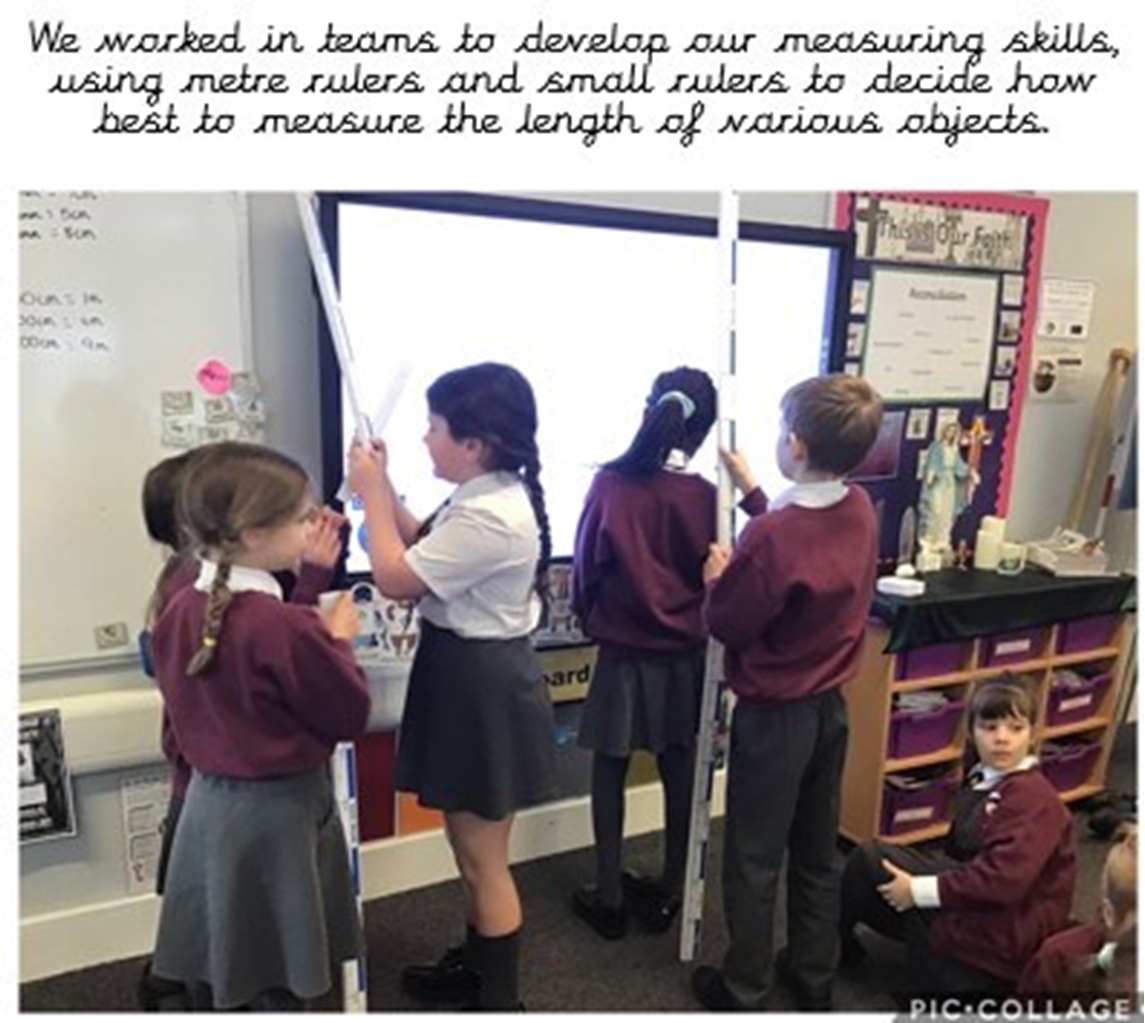
Children are taught through clear modelling and can develop their knowledge and understanding of mathematical concepts. Our approach incorporates using concrete objects, pictures, words and numbers to help children explore and demonstrate mathematical ideas, enrich their learning experience and deepen understanding at all levels.
Concrete - children can use concrete objects and manipulatives to help them understand and explain what they are doing.
Pictorial - children then build on this concrete approach by using pictorial representations, which can then be used to reason and solve problems.
Abstract - With the foundations firmly laid, children can move to an abstract approach using numbers and key concepts with confidence.
Children move through the different stages of their learning at their own pace.
Children who have shown their understanding at a deep level within the unit, will have opportunities to apply these skills in a GREATER DEPTH activity. These activities are challenging and ensure that children are using more than just one skill to be able to answer the mathematical problems.
Reasoning and problem solving are integral to the activities children are given to develop their mathematical thinking.
Children are encouraged to explore, apply and evaluate their mathematical approach during investigations to develop a deeper understanding when solving different problems/puzzles.
A love of maths is encouraged throughout school via links with other subjects, applying an ever-growing range of skills with growing independence.
Impact
In order to ensure we measure impact; we gather a variety of data and feedback to check whether learning has occurred. The information gathered through these methods directly impacts the future planning of teaching and learning opportunities, ensuring that we are responsive to the needs of our learners.
Teachers use formative assessment to evaluate the learning during a lesson. They may ask questions to check understanding or scrutinise independent work in order to identify common misconceptions or share thinking. Such assessment allows teachers the flexibility to intervene in a lesson to remind, redirect or reteach pupils as required.
We ensure that children develop:
A mathematical concept or skill has been mastered when a child can show it in multiple ways, using the mathematical language to explain their ideas and can independently apply the concept to new problems in unfamiliar situations.
Maths in the Early Years (EYFS)
We provide children with opportunities to practise and improve their skills in counting numbers, calculating simple addition and subtraction problems, and to describe shapes, spaces, and measures.
We provide children with opportunities to engage in maths activities both inside and outside of the classroom. Easily accessible, quality maths resources are provided so that children can self-select and engage freely as well as engaging in planned activities. Whenever possible, children’s interests are used to support delivering the mathematics curriculum.
We continually observe and assess children against these areas using their age-related objectives, and plan the next steps in their mathematical development.
Great is our Lord and mighty in power; his understanding has no limit
Psalms 147: 5
Adaptive Teaching
In Mathematics, adaptive teaching strategies are used to ensure that every pupil can access learning, develop confidence in mathematics and achieve success. Lessons are carefully planned and scaffolded so that all children can work towards the same mathematical learning intention at an appropriate level. Pupils with additional needs, including those with Special Educational Needs (SEN), receive tailored support through high-quality teacher guidance, explicit modelling, the use of concrete resources, pictorial representations, mathematical talk, adapted resources and tasks broken down into smaller, manageable steps. Where appropriate, pupils are given additional opportunities to practise key skills, consolidate their understanding and use carefully selected resources to support their learning. Our aim is for every child to become a resilient, independent and confident mathematician who can reason, solve problems and apply their mathematical knowledge across the curriculum and in everyday life.
Curriculum
Catholic Social Teaching
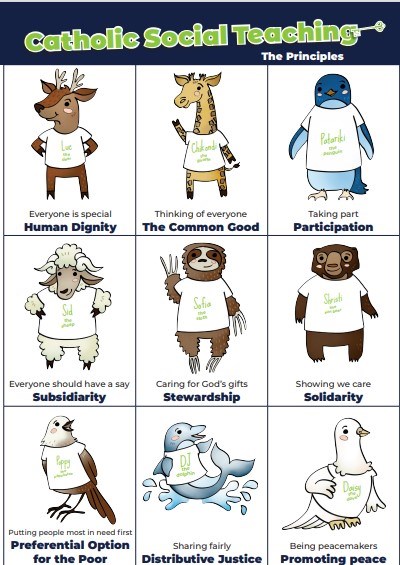
At Saint Ambrose, our Mathematics curriculum is closely connected to CAFOD’s Catholic Social Teaching across Key Stage 1 and Key Stage 2. Through mathematical inquiry, pupils learn about the dignity of every person by recognising that everyone can think mathematically and contribute ideas of value. They explore God’s creation by studying patterns, shapes and structures in the natural world, developing a sense of wonder and responsibility for our common home. As children engage with real life contexts, such as data about the environment, resources and global communities, they deepen their understanding of solidarity and the global family, seeing how numbers can tell the stories of people around the world.
In KS2, pupils build on these foundations by using maths to consider issues of justice, fairness and the common good, whether through analysing data about global inequality, examining how resources are shared, or applying problem solving skills to scenarios inspired by CAFOD’s mission. In this way, Mathematics becomes not only a tool for reasoning and problem solving, but a meaningful opportunity for pupils to reflect our Catholic mission and use their growing understanding to imagine a fairer, more compassionate world.
Catholic School Pupil Profile

Mathematics encourages pupils to be curious and wise as they investigate numbers, patterns and problems, discovering how mathematical thinking helps us understand both ourselves and the world around us. Through exploring a range of strategies, representations and real life contexts, children become attentive and discerning, noticing detail, structure and relationships that deepen their understanding of how maths shapes everyday life. As they explain their reasoning and evaluate different methods, pupils learn to be truthful and eloquent, expressing their ideas clearly and appreciating the value of honest, respectful mathematical dialogue.
Working with problems inspired by global themes nurtures compassionate and loving attitudes, encouraging pupils to consider fairness, human dignity and how data can reveal the needs and experiences of others. Exploring mathematical ideas linked to creation, community and stewardship helps children to be faith filled and hopeful, understanding how maths can illuminate issues of justice, peace and care for our common home. Mathematics also develops intentional and active learners who work with purpose, persevere with challenge and reflect on their progress, and helps them become generous as they share resources, collaborate on investigations and appreciate the gifts and talents of others.
What our children say about Maths
“I like counting things and seeing how many I have!”
“I like using cubes to make tall towers and then counting them.”
“I feel proud when I can add numbers by myself.”
“I like practising my counting because I get faster each time.”
“I like learning times tables because it helps me do harder questions.”
“TTRS is fun because I can race and try to beat my score.”
“I like learning new ways to solve problems because it makes maths easier.”
“I enjoy times tables practice because it helps me feel confident in lessons.”
“I like using different strategies and choosing the one that works best for me.”
“TTRS helps me learn my times tables quickly, and I like moving up the leaderboard.”
“I like improving my maths skills and seeing how much quicker I can work.”
“Knowing my times tables helps me with fractions, division and harder problems.”
“I enjoy tackling tricky problems because I feel proud when I figure them out.”
“Being confident with times tables makes all the Year 6 maths challenges easier.”
Times Tables Rockstars
EYFS/Reception Class
To count in multiples of 10
Year 1
To count in multiples of twos, fives and tens
Year 2
To recall and use multiplication and division facts for the 2, 5 and 10 times table.
Year 3
To recall and use multiplication and division facts for the 3, 4 and 6 multiplication tables.
Year 4
To recall multiplication and division facts for the 7, 8, 9, 11 and 12 multiplication tables.
Year 5
To recall multiplication and division facts for all multiplication tables from 1 to 12.
Multiply and divide numbers mentally drawing upon known facts e.g. 30 x 40, 70 x 80, 0.7 x 6
Year 6
To recall multiplication and division facts for all multiplication tables from 1 to 12.
To perform mental calculations, including mixed operations and large numbers.
Why are times tables important?
You would be amazed at how much of our maths at school and in real life is based on tables. It is important that your child knows all of their times tables (up to 12x12) by the end of Year Four.
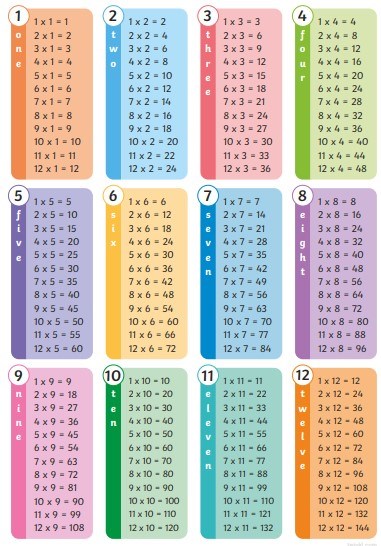
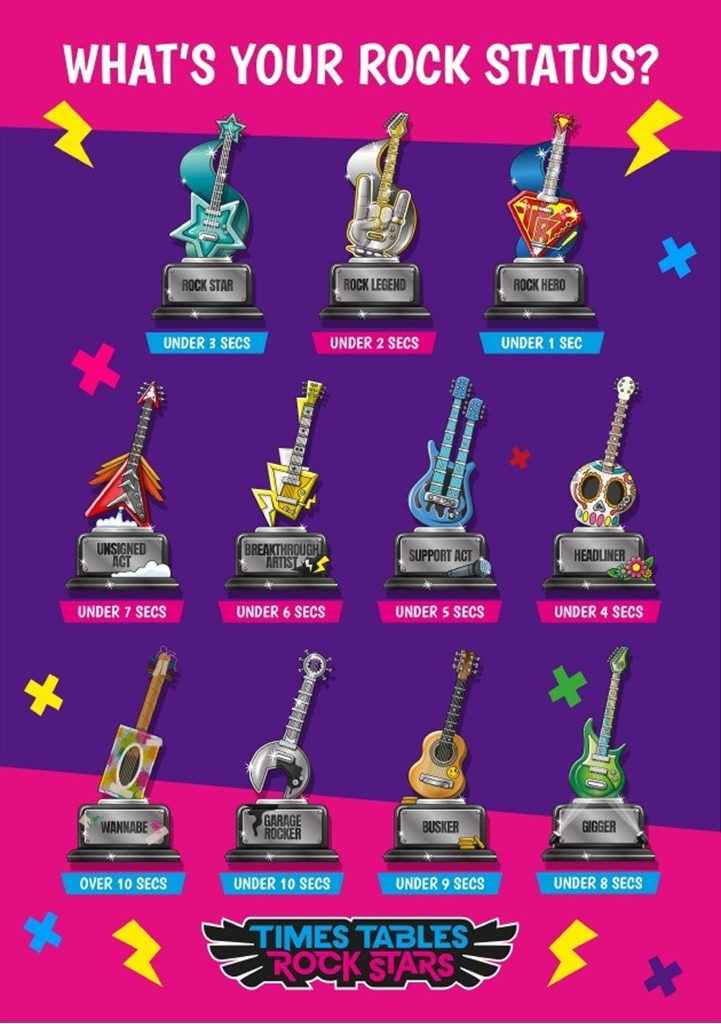
Times Table Rock Stars is a fun and challenging programme designed to help students master the times tables! To be a Times Table Rock Star you need to answer any multiplication fact up to 12×12 in less than 3 seconds! Each child will be given a Rock Speed and Status based on how quickly they can answer questions and how many they can answer correctly. The goal is for all participating rockers to be a Times Tables Rock Star after 20 weeks!
The Rock Speeds and Statuses
By answering a question in the given times below, these are the statuses you can achieve!
Rock Hero - 1 second per question or less
Rock Legend - 2 seconds per question or less
Rock Star - 3 seconds per question or less
Headliner - 4 seconds per question or less
Support Act - 5 seconds per question or less
Breakthrough Artist - 6 seconds per question or less
Unsigned Act - 7 seconds per question or less
Gigger - 8 seconds per question or less
Busker - 9 seconds per question or less
Garage Rocker - 10 seconds per question or less
Wannabe - more than 10 seconds per question
Game Types
There are 5 games that you can play online:
Garage
- Single player
- Teacher sets the times tables
- Games are 1, 2 or 3 minutes long, you can choose!
- 10 coins per correct answer
Studio
- Lots of questions - 12x12
- Improve your Rock Speed and Status on this game!
- Games are 1 minute long
- 1 coin per correct answer
Arena
- Multiplayer
- Teacher sets the times tables
- Compete against your friends in the class
- Games are 1 minute long
- Earn 1 coin per correct answer
Festival
- Play against children from around the world!
- Lots of questions - 12x12
- Games are 1 minute long
- Earn 1 coin per correct answer
Soundcheck
- Emulator - 20 questions with a 6 second time limit for each
- Multiplication only
- Earn 5 coins per correct answer
Remember, the more you play and the more questions you get correct, the more coins you can earn for your Avatar! Can you master your Times Tables and become a Rock Star?
More to come soon! Keep checking for updates on competitions and leader boards!
(You can download a free app on Apple and Android products)
Year 4 Multiplication Check
Children will be tested using an on-screen check (using iPads), where they will have to answer multiplication questions against the clock.
Children will have 6 seconds to answer each question in a series of 25 questions.
The expectation is that pupils should be able to get all 25 questions correct given the time allowed.
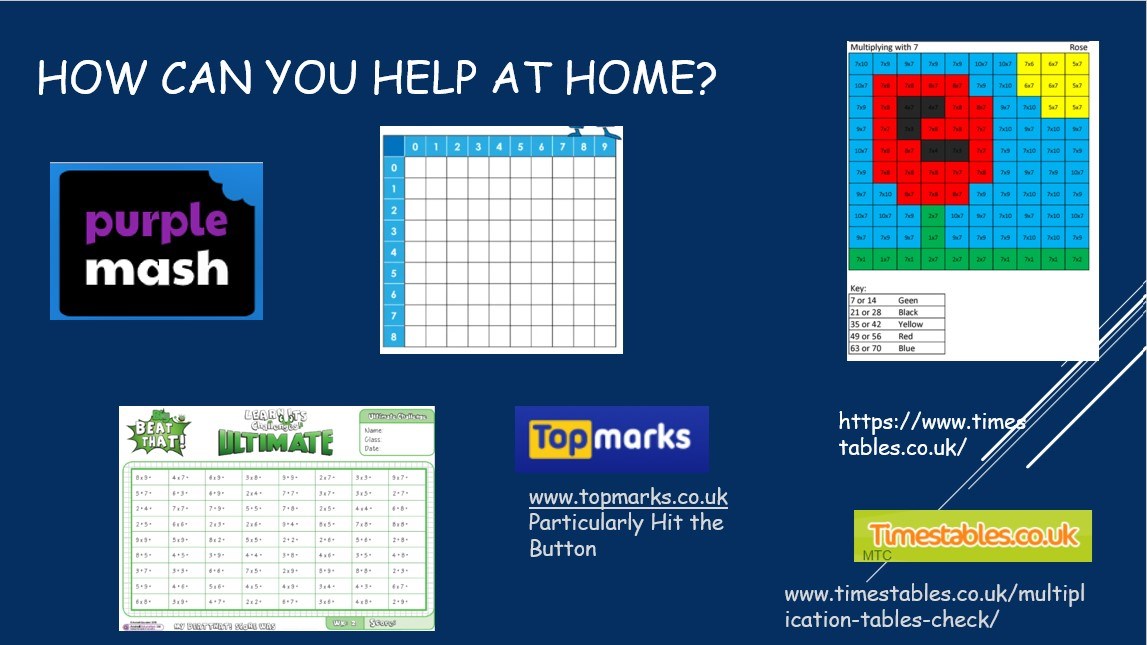
Websites for practice:
2022 - 2023:
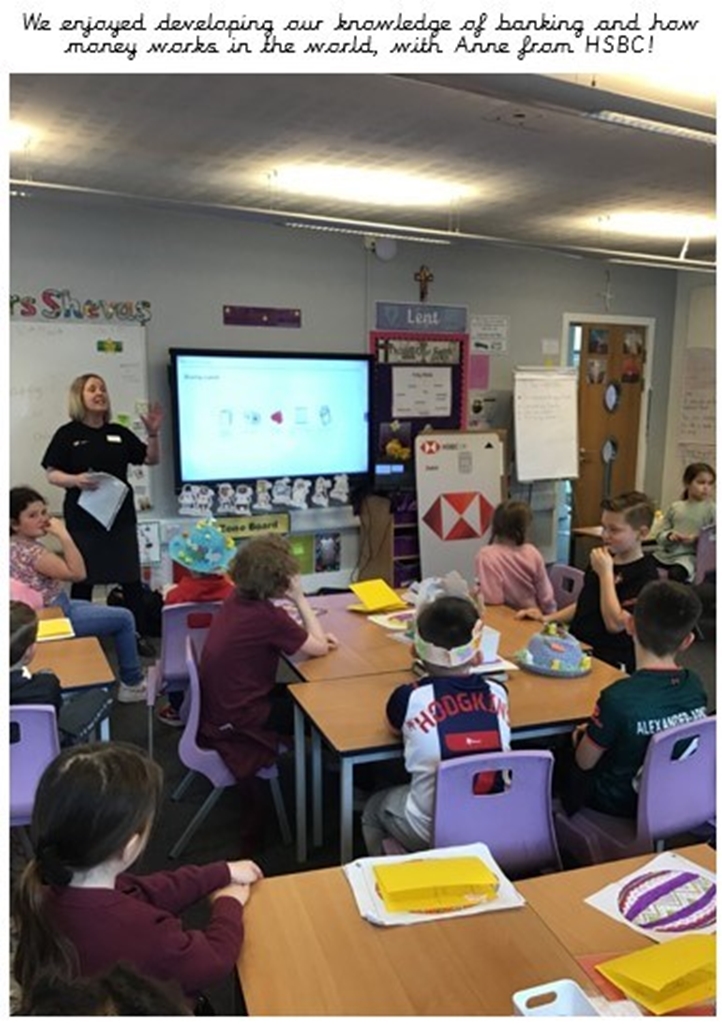
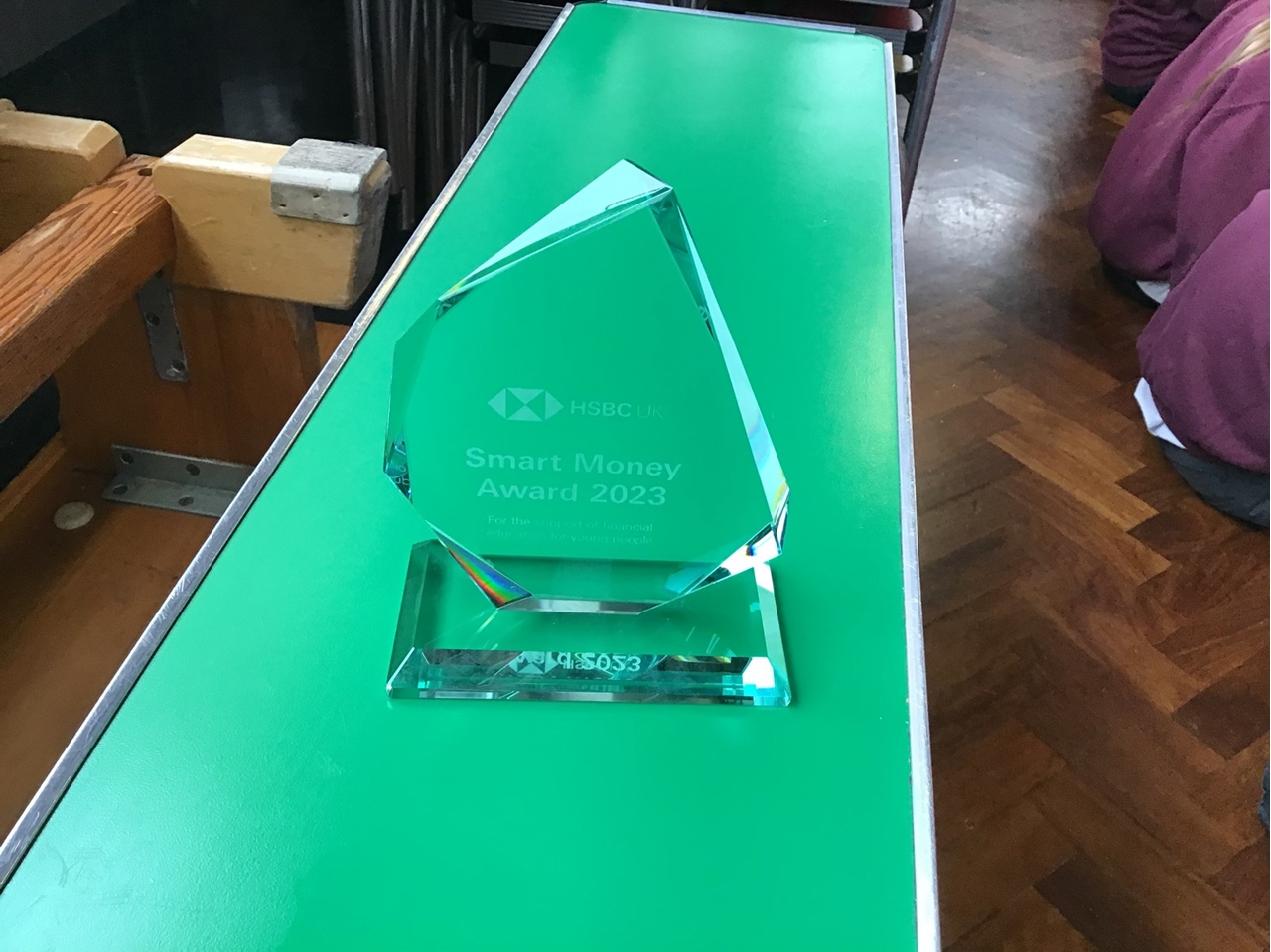
HSBC Award
 |
St Ambrose |
|---|---|
| Leswell Street Kidderminster DY10 1RP |
Contact Information |
|
|---|---|
| Tel: 01562 823568 Email: enquiry_amb@emmausmac.com |
Information |
|
|---|---|
Mrs E Brocklesby - Executive Principal & Designated Safeguarding Lead For enquiries or to request paper copies of information from this website please contact the school office – Mrs Fish or Miss Downs. David Pitt - SENCo Mrs Helen Black - Chair of Governing Body |